Hege Academic Commons

Mentors

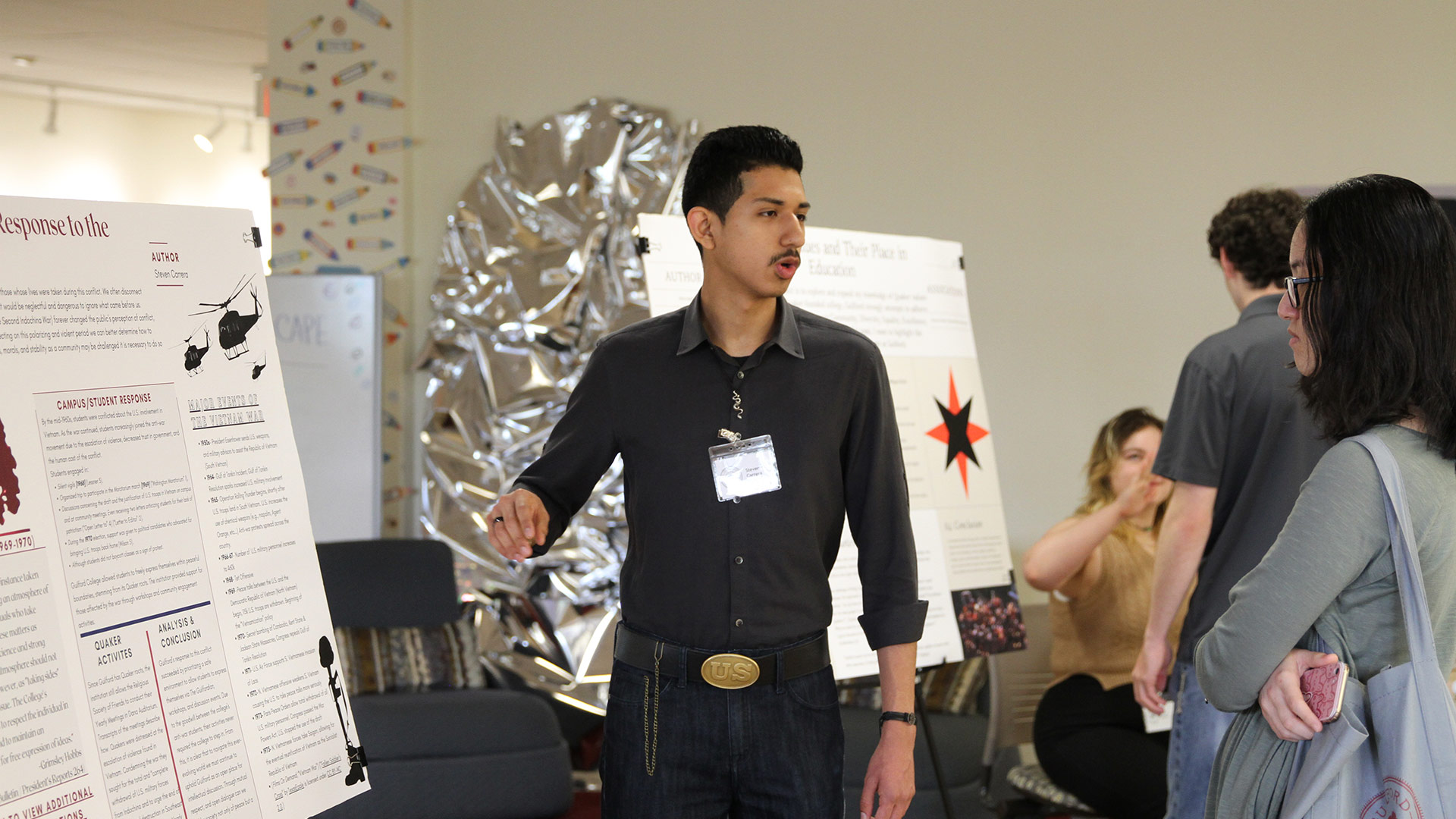
While the Guilford Undergraduate Symposium (GUS) showcases student work, none of it would be possible without faculty and staff mentors. As GUS has grown from about 50 presentations in 2008 to more than 150 in recent years, mentors have played a crucial role in guiding students toward their project's goal, be it an independent study, a series of experiments, a dramatic presentation, an art installation, or anything in between, mentors are there to guide. While participation as either a student presenter or a faculty/staff mentor is not required, we hope that all will get involved, and stay involved, to make GUS a premier event of the academic calendar.

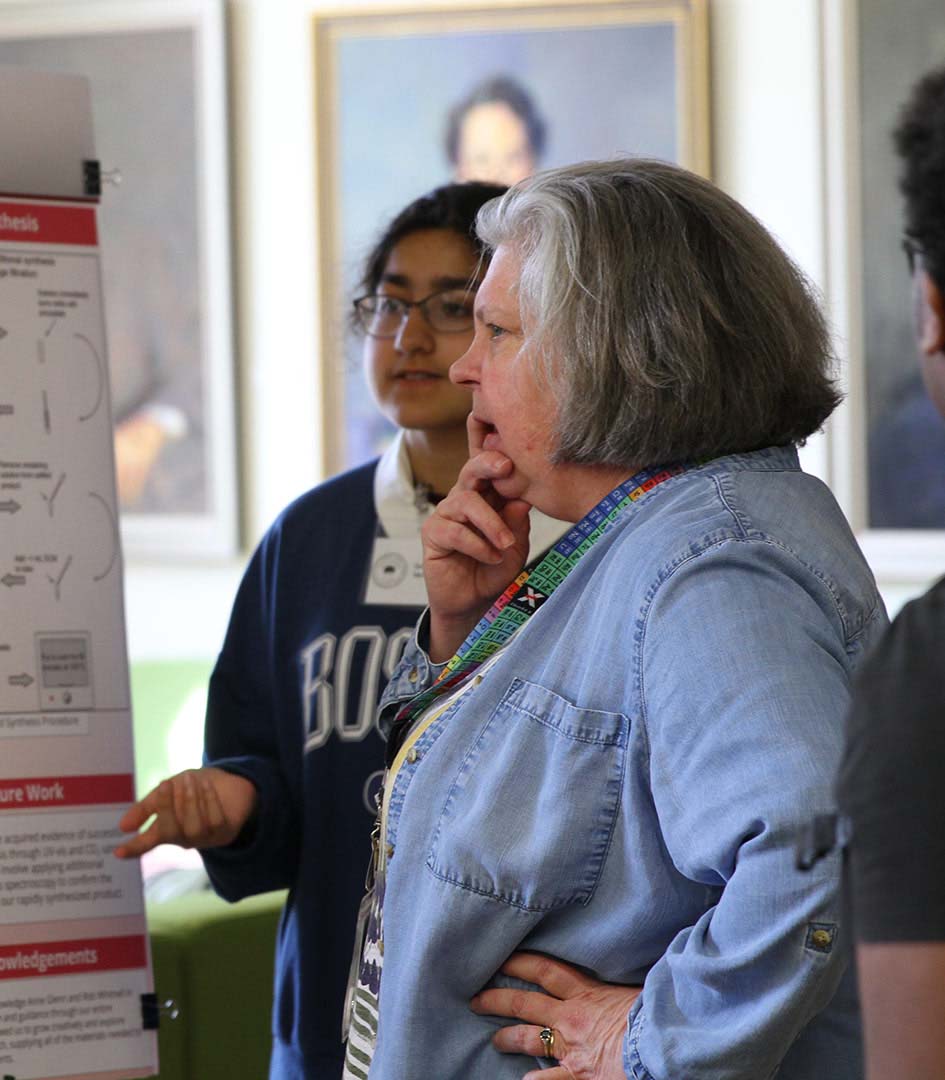
All accepted abracts will be published online in the annual symposium program. Research mentors will be listed long with their students' abstracts and will be acknowledged at the presentation sessions. Research mentors are strongly encouraged to attend the sessions and to assist students with presentation practice or design, particularly student who have not yet presented their work for a general audience.

Additionally, a faculty or staff moderator/chair will be present at each session to facilitate discussion and moderate the Q&A session. If you wish to serve as a moderator/chair, please fill out the moderator form (link coming soon) or email gus [at] guilford.edu.

Effective mentoring

Mentoring is a valuable and rewarding role that allows you to share your knowledge, experience, and wisdom with others. In this guide, we'll share some key tips and strategies to help you become a successful and impactful mentor.

  1. Build a strong relationship
    • Listen actively: Pay close attention to your mentee's needs, concerns, and goals; show empathy and understanding
    • Establish open communication: Create an environment where your mentee feels comfortable sharing their thoughts and challenges
    • Set clear expectations: Define the scope and objectives of your mentoring relationship from the beginning; discuss goals and milestones
  2. Foster growth and development
    • Set goals: Work together to define clear and achievable goals. Monitor progress and provide guidance
    • Encourage critical thinking: Challenge your mentee's thinking and encourage them to explore new ideas and solutions
    • Promote independence: Gradually empower your mentee to make decisions and take ownership of their development
  3. Be patient and flexible
    • Respect differences: Recognize that your mentee may have a different learning style or pace than you
    • Adjust to changing needs: As your mentee evolves, be prepared to adapt your mentoring approach accordingly
  4. Provide resources
    • Recommend reading materials: Suggest books, articles, or online courses that align with their goals
    • Connect them: Introduce your mentee to relevant contacts and networks that can help them on their journey
  5. Celebrate achievements
    • Positive reinforcement: Provide positive feedback and recognition for their progress and accomplishments
    • Motivate continual growth: Use achievements as a source of motivation for your mentee to keep pushing their limits
  6. Reflect and improve
    • Self-assessment: Evaluate your own mentoring style and seek feedback from your mentee to identify areas for improvement
    • Learning opportunities: Stay updated on industry trends and best practices to provide relevant guidance

Mentoring tools

Having a well-prepared mentor can make a huge difference in undergraduate research. We have compiled a list of resources here to help mentors refine existing skills and develop new ones. This list is updated periodically when new resources are found.

A good place to start is with Shanahan, Ackley-Holbrook, Hall, Stewart, and Walkington (2015), who note the "well-established benefits for students involved in [undergraduate research] are dependent, first and foremost, on high-quality mentoring." (p. 1) Table 1, on p. 4, is a good overview of the article's point, which comes after a review of more than 100 scholarly articles. Elon University's Center for Engaged Learning also has resources on the salient practices.

Other resources

More tips

  • Create a mentoring agreement: A key aspect of effective mentoring is establishing clear expectations for all parties from the beginning. A mentoring agreement can serve an easy way to outline what is expected of all parties. Check out the sample, which is a Word document, and adjust it as needed (the sample was created at Oregon State University in 2019 and retrieved from the University of Washington's Office of Undergraduate Research in 2023). Feel free to edit the document to suit your mentee's needs and goals.
  • Become an inclusive and equitable mentor: This free and open-access resource by Pierszalowski and Buser, entitled Mentoring the Next Generation: Using Undergraduate Research to Broaden Engagement and Impact in STEM, is a comprehensive guide to inclusive mentoring that is applicable for more than just STEM mentors. Feel free to use the guide's sections whenever you want to consider equitable practices at specific points in your mentoring relationships.
  • Promote belonging at all levels: Creating an equitable and inclusive environment means welcoming all parts of a student and their identities. The University of Washington's Office of Undergraduate Research created a conversation starter document to help mentors who aren't sure where to begin discussions about identity. It's important to note that student responses should be met with curiosity, enthusiasm, and empathy. Guilford's Office of Diversity, Equity, and Inclusion and Center for Principled Problem Solving can also help with questions about identity, diversity, equity, and inclusion in academic spaces.