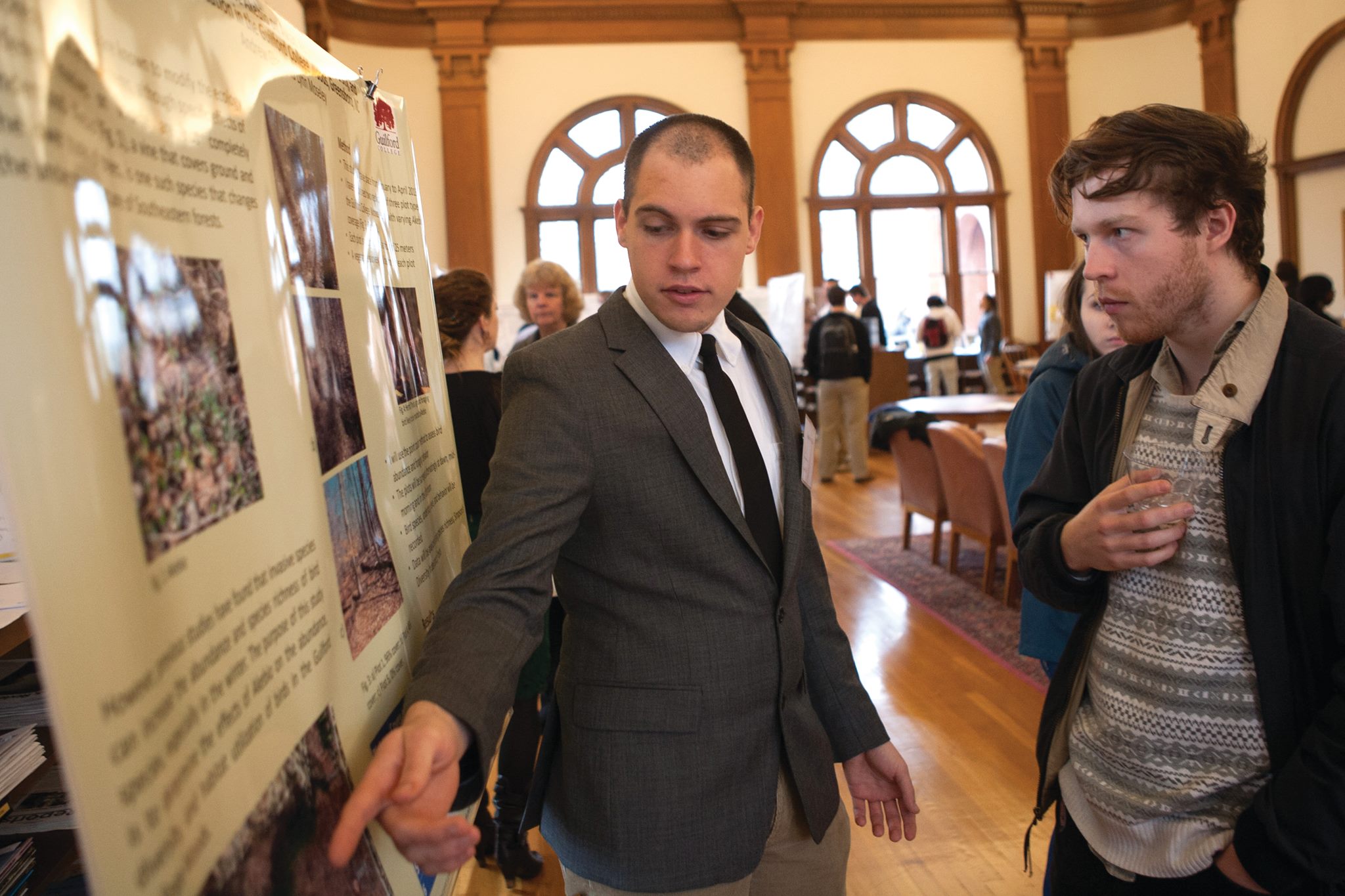
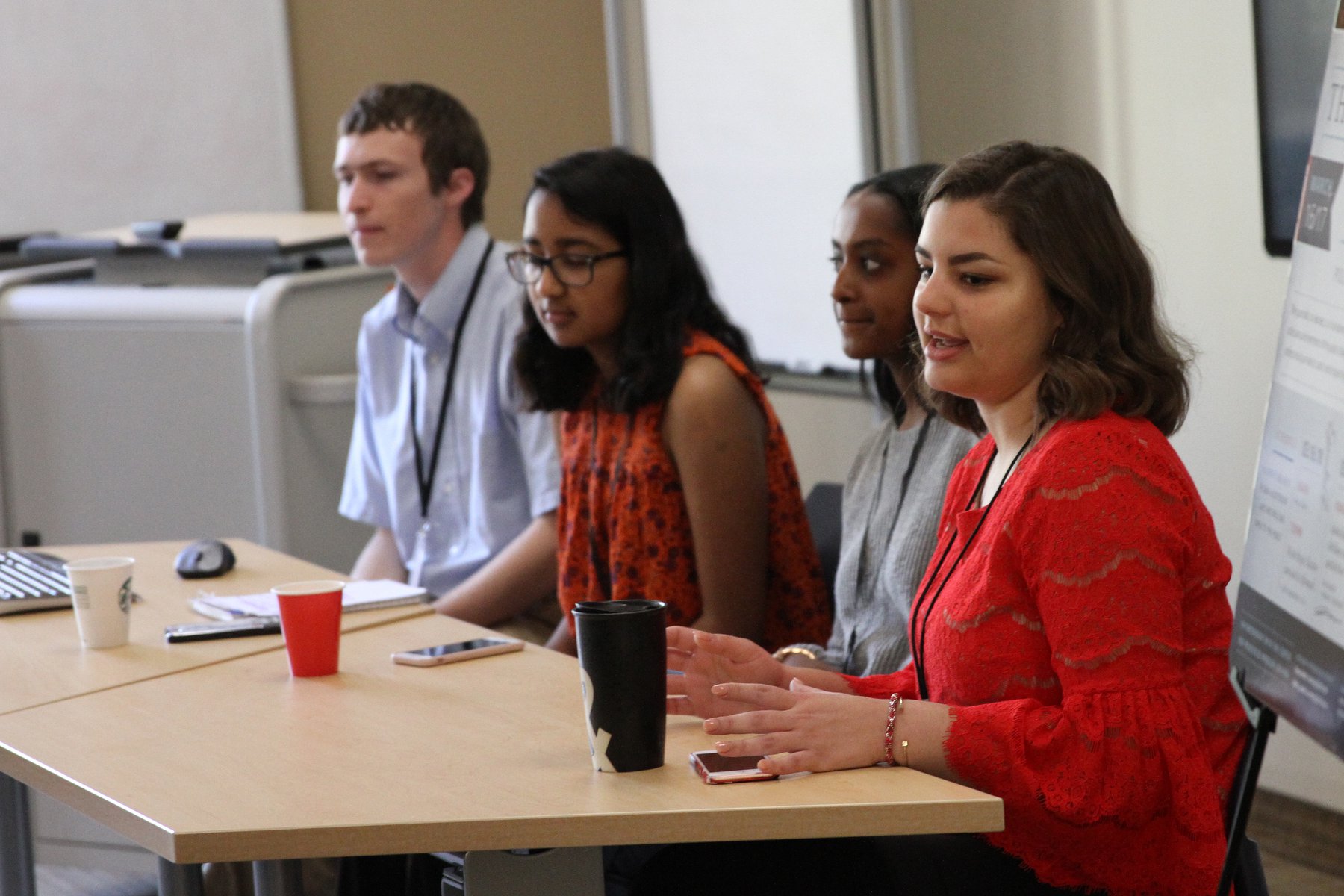
The Guilford Undergraduate Symposium (GUS) is an excellent opportunity for students to present their work to a diverse group of students, staff, faculty, and members of the community. We encourage all students in every discipline to consider presenting their project at GUS. Doing so will give you a valuable opportunity to hone presentation skills, research skills, and information literacy skills.
If you have an idea for a project or are already working on a project you'd like to present at GUS, you've already made a great start. If you'd like to present but are having trouble deciding on a topic, contact your academic advisor and/or your major department chair (or your favorite instructor) to discuss possible topics. You can also feel free to contact us and we will talk through the research process with you.
In discussions with your advisors, you should address your areas of research interest, how to narrow your topic to something manageable, the names of potential mentors (if different from your advisor), and the appropriate mode for presenting your research.
We've put together a timeline and a FAQ for presenters. Don't hesitate to check out previous editions of GUS for inspiration.
All researchers have an obligation to conduct research ethically. To that end, there are four common values associated with the responsible conduct of research (Steneck, 2007, p. 3):
If your research involves human beings or animals, you will need to get clearance from the Institutional Review Board at irb [at] guilford.edu.
The reality is that most student applications are accepted to at GUS. We know that many research conferences are exclusionary so we have deliberately made every effort to ensure that GUS is as inclusive as possible. The application review process serves as a chance for the Steering Committee to provide feedback so that you are prepared for your presentation..
The reality is that all students - from first year through fourth year - may present at GUS. We also strive to include students from the Early College and the Continuing Education programs. The more the merrier!
The reality is that we have had students from all majors present research. We have hosted poetry readings, one-act plays, musical performances, film exhibitions, and many others. We have had poster presentations by history majors and psychology majors and criminal justice majors and English majors. We encourage creativity in your presentation where possible.
The reality is that students at all stages of their research process have presented. Feel free to use GUS as a forum for feedback on your thesis or research methods or both. GUS is meant to be a supportive place to discuss projects of all shapes and sizes so take advantage of that.